
Infrastructure Automation
Provisioning, configuration, and delivery pipelines that make environments reproducible and auditable.
Scipionic Systems is the implementation arm of the group. We automate infrastructure, deploy AI systems, and build the observability that lets enterprise and public-sector operators trust what they run. When a Scipionic concept needs to become a working thing, from a MeshOptixIQ deployment to an Energy pilot, Systems builds it.
Provisioning, configuration, and delivery pipelines that make environments reproducible and auditable.
Production-grade model serving, evaluation, and guardrails for teams that need results they can defend.
Metrics, traces, and dashboards that turn opaque systems into operated ones.
The build team behind MeshOptixIQ rollouts, Scipionic Energy pilots, and the working models on this site.
 Open the interactive presentation
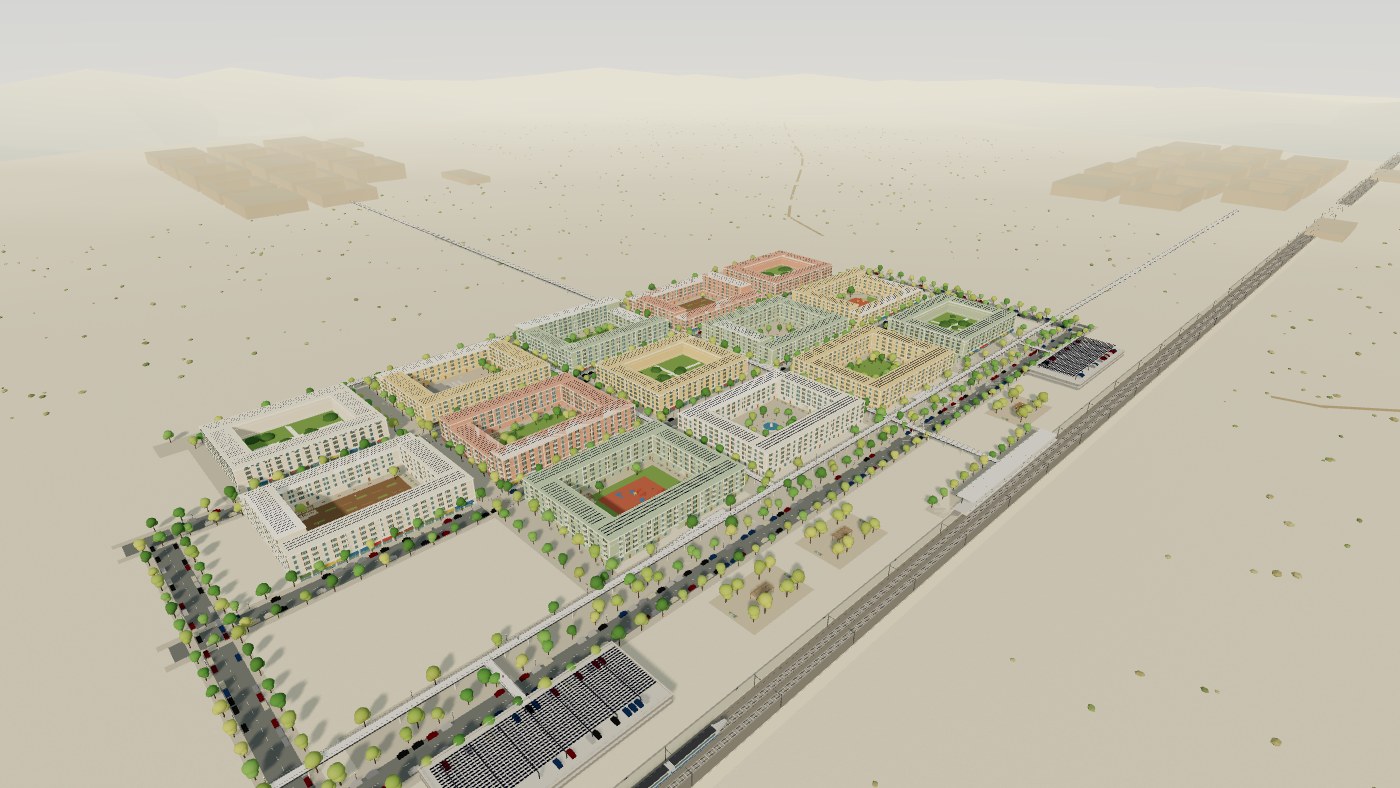
Courtyard homes, shaded gardens, local shops and a train a short walk away. Explore a proposed desert neighborhood with 1.79 million square feet of gross housing floor area and 9.25 acres of public courtyards. Four concealed, multistory datacenters share a 950,000-square-foot program—237,500 square feet each. Walk the public spaces, follow the elevated paths, then reveal the shared infrastructure.
The full paper is a citation-backed civic proposal addressed to Lancaster, Palmdale, Los Angeles County, the State of California, high-speed rail advocates, and the voting public. This is what it argues.
A data center is a building that turns electricity into computation and heat. The neighborhood should get both back.
Three problems share one site. California must plan for more than 2.5 million homes in eight years and has never come close to that pace; the Antelope Valley is where Los Angeles goes when it can no longer afford Los Angeles. Data centers are being rejected across the country, with 70 percent of Americans now opposed to one near their home and the Prince William Digital Gateway killed in court after years of work. And the region is positioned to become a genuine rail junction, if the state ever finishes the line.
The microgrid neighborhood answers all three: a walkable, mixed-income town in which multistory data centers are distributed through the fabric, architecturally disguised, silent, secure, and water-frugal, and in which the value they create is routed back to the community that hosts them.
Vertical, urban-integrated halls as Singapore and Tokyo already build; a numeric noise limit at the property line; air cooling with geothermal loops instead of the one to five million gallons a day an evaporative campus drinks.
Free electricity and internet bundled into rent for the affordable homes, and a district thermal loop that heats in winter and drives absorption cooling in summer, the benefit that matters in the desert.
Perimeter courtyard blocks of four to six stories, their courtyards programmed as public parks, playgrounds, and venues under recorded access easements.
Pedestrian streets inside, cars received at the edge in structures sized at twice resident need, with the surplus doubling as paid parking and rail park-and-ride.
The paper does not assume a train. High-speed rail to Palmdale is environmentally cleared but unfunded for construction after the state walked away from federal money; the High Desert Corridor is at the engineering stage; Brightline West targets late 2029 to Rancho Cucamonga. Metrolink already serves Palmdale and Lancaster today. What the Valley does have now is one of the best solar resources in the country, land at master-plan prices, and a city, Lancaster, that has repeatedly volunteered to go first on clean energy.
Its groundwater basin is adjudicated: pumping is capped by a court-supervised Watermaster. That is exactly why near-zero-water cooling is a necessity rather than marketing, and the paper says so before anyone else can.
Wherever track is built or improved, it should carry fibre and transmission alongside it, as Southern Pacific's right-of-way once carried the network that became Sprint and as the SOO Green HVDC link is now buried inside a railroad corridor. That framing gives rail advocates a new argument and gives a data-center developer a natural role as anchor customer for the corridor.
What separates the proposal from a brochure is enforceability. Scipionic would record these against the land so they survive changes of ownership:
Not a company town: residents are tenants and neighbors, not employees, and every mechanism distributes power rather than concentrating it. If a data hall empties, the fund carries utilities and the homes, microgrid, and thermal loop remain durable assets. "Silent" and "invisible" are bounded, measurable design standards, not slogans. And the affordable housing would be privately owned and covenant-restricted, deliberately structured to fall outside Article 34's voter-approval trigger.
Public engagement, site assembly, water-rights analysis within the adjudicated basin, and technical validation of the cooling, waste-heat, and microgrid systems.
A specific plan that permits the courtyard-block form, paired with the state's housing-streamlining laws, with the covenants recorded here.
Build the first courtyard blocks and their data halls and run our own infrastructure in them before leasing to anyone else.
Residents in below-market homes with bundled power and internet, public courtyards open, the thermal loop running; then Arizona, Nevada, and Utah.
The energy side of the same thesis, built by Scipionic Energy.
Live CAISO generation mix, the evening ramp, carbon intensity, hub prices, and wildfire incidents, refreshed every five minutes.
Strategic ReportThe wildfire resilience strategy, subsidy stack, and phased rollout model behind community microgrids.
Policy PaperWhat it would actually take, in law and in finance, to build out California's dormant public utility.
CompanyCommunity-scale resilience programs, microgrids, and policy-ready energy pilots.